Mobile Application Development
Mobile devices have quickly moved from being used simply for calls or messages to being an important work, infotainment & entertainment tool.
Custom mobile app development implies the presence of your idea and its execution by a professional development team. The great advantage of the custom mobile app development is that you are always aware of the development process and can influence it.
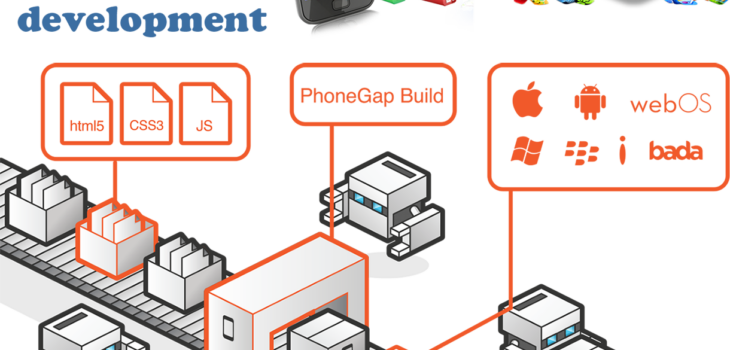
koukas.IT.services is ready to develop an app for you and your needs. We have chosen the hybrid mobile applications development in order to develop them quickly and on more than one platform.
Hybrid mobile apps are like any other apps you’ll find on your phone. They install on your device. You can find them in app stores. With them, you can play games, engage your friends through social media, take photos, track your health, and much more.
Like the websites on the internet, hybrid mobile apps are built with a combination of web technologies like HTML, CSS, and JavaScript. The key difference is that hybrid apps are hosted inside a native application that utilizes a mobile platform’s WebView. (You can think of the WebView as a chromeless browser window that’s typically configured to run full screen.) This enables them to access device capabilities such as the accelerometer, camera, contacts, and more. These are capabilities that are often restricted to access from inside mobile browsers. Furthermore, hybrid mobile apps can include native UI elements in situations where necessary.
Hybrid mobile applications are built in a similar manner as websites. Both use a combination of technologies like HTML, CSS, and JavaScript. However, instead of targeting a mobile browser, hybrid applications target a WebView hosted inside a native container. This enables them to do things like access the hardware capabilities of the mobile device.
Today, most hybrid mobile applications leverage Apache Cordova, a platform that provides a consistent set of JavaScript APIs to access device capabilities through plug-ins, which are built with native code. As a side note, Apache Cordova originally started as a project named PhoneGap. These days, PhoneGap exists as a distribution of Apache Cordova that includes additional tools.
Some of the benefits of using hybrid mobile development are:
- * Developer can use existing web skills
- * One code base for multiple platforms (i.e. iOS, Android, Windows Phone, webOS, BlackBerry OS, etc.)
- * Reduced development time and cost
- * Easily design for various form factors (including tablets) using responsive web design
- * Access to some device and operating system features
- * Advanced offline capabilities
- * Increased visibility because the app can be distributed natively (via app stores) and to mobile browsers (via search engines)
On the other hand, there area few drawbacks to using hybrid technologies, such as:
- * Performance issues for certain types of apps (ones relying on complex native functionality or heavy transitions, such as 3D games)
- * Not all device and operating system features are supported – but the most known!
- * Risk of being rejected by Apple if the app does not feel native enough (for example, a simple website)
These drawbacks are significant and cannot be ignored, and they show that the hybrid approach does not suit all kinds of apps. You’ll need to carefully evaluate your target users, their platforms of choice, and the app’s requirements. In the case of many apps, such as content-driven ones, the benefits outweigh the drawbacks.
TECHNOLOGIES:
- HTML5, CSS3, JavaScript
- Phonegap – Apache Cordova
- JQuery Mobile, Ionic, AngularJS
- NativeScript + Angular
- Google Flutter